
Let’s start with the fact that anything coming out of the White House, especially this White House, is likely to be gasoline on an already burning fire—a fire that is burning both for those who celebrate the firelight and for those who fear it is burning our country down. Some of that is a function of how this White House chooses to message, some of it is the content of the messaging, and a great deal of it may be that we all marinate in a broader culture with increasingly little patience for that which we do not already believe.
So, it’s pretty challenging, as we are seeing in the press, for reactions to the Presidential proclamation on Jewish American Heritage Month to be anything other than a prooftext for what people already believe about this President, how he sees the world, and what he says about it. That said, it pays to try: At least one part of his proclamation is unprecedented. It may even help us to step back from using this document as anything more than a piece of litmus paper to measure how base or acidic our culture is.
Here is what the presidential proclamation said:
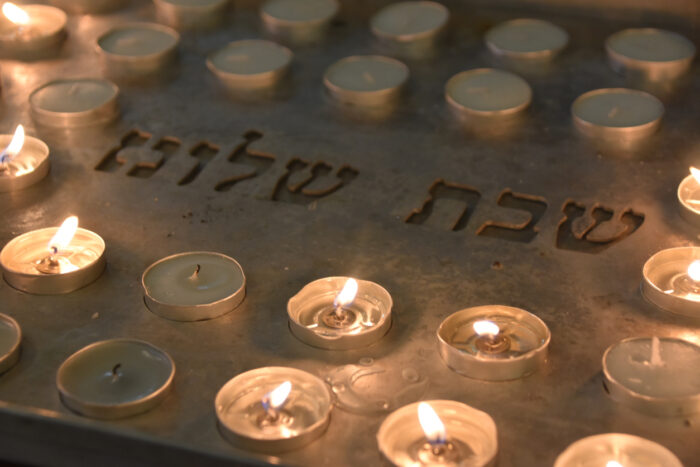
“In special honor of 250 glorious years of American independence and on the weekend of Rededicate 250—a national jubilee of prayer, praise, and thanksgiving—Jewish Americans are encouraged to observe a national Sabbath. From sundown on May 15 to nightfall on May 16, friends, families, and communities of all backgrounds may come together in gratitude for our great Nation. This day will recognize the sacred Jewish tradition of setting aside time for rest, reflection, and gratitude to the Almighty.”
On its face, the statement doesn’t seem so bad, and it even managed to capture the essentials of Shabbat, including the part about it being for people of all backgrounds— Shabbat was understood from biblical times to be something for all people, not only Jews. By staying out of the weeds of how Shabbat should be observed, the proclamation honored the fact that Shabbat observance has varied significantly over the past 3,500 years, and continues to do so today.
So far, the proclamation is two for two. On the other hand—and yes, there is a serious “other hand”—linking Shabbat to gratitude for a political entity, as this proclamation does, is simply not a part of any Sabbath tradition, nor has it ever been, going back to Shabbat in the Bible.
In fact, there is reason to believe, at least for the rabbis of the Talmud, that Shabbat observance was linked to the need for guardrails on political or nationalist actions including building the Tabernacle or the Temple or going to war. Don’t get me wrong, I am deeply grateful to and for the United States of America, and proud to say so. I just don’t think that a “national Shabbat” needs to formally proclaim part of that gratitude. Not to mention that overtly connecting Shabbat 250 to Rededicate 250, an overwhelmingly Christian event, undermines the idea of Shabbat being rooted in Jewish teaching, even as it points beyond a particular faith tradition.
Based on this—getting two things quite right and two others, not so much—it looks like Shabbat 250 is neither as terrible as some suggest, nor is it as fantastic as others would have us believe. What it does do is afford a wonderful opportunity to reflect on an old debate about the place of religion in American political life—one that goes back to John Adams, Thomas Jefferson, and James Madison.
Without rehashing all of the details and appreciating that this is not the place for footnotes, when it came to religion in public life and government’s place in regulating it, Adams largely supported a fair degree of establishment. He believed that our nation would not survive without a foundation in faith, and that the law should make sure that faith and its virtues should be supported, even by the state. And to be clear, by “faith,” he meant Christian faith that fell loosely within some kind of Anglican-Congregationalist-Lutheran spectrum.
Jefferson was not so different from Adams about the value and even necessity of religion to uphold the state, and therefore to have the state support it, at least sometimes. That said, as the editor of his own Bible and the holder of a wider definition of Christian faith, he was more expansive regarding what counted as “good and worthy religion,” going so far as to protect Baptists and having positive things to say about “Hebrews and Mohammedans.”
Then there was Madison, who believed that the absolute best thing that the state could do for both religion and faith to help them to flourish, which he agreed was important, was to leave them completely alone: No state and religion entanglement at all. He thought such entanglement would ultimately be bad for both.
I have my opinions about which of these founding fathers was most right, and that colors my intuitive reaction to Shabbat 250, but that is secondary to the more durable lesson here—that our nation was founded not despite these differences of opinion, but in trying to honor them all. That debate was not finished in their lifetimes, nor do I think it will be finished in ours.
My hope is that wherever any of us lands on Shabbat 250, we honor all of our founders’ views on this issue, not matter the Shabbat table at which we sit, or don’t sit, this week, especially because honoring this variety of views successfully may be the key to the next 250 years of American cultural/political/spiritual vitality—as it was when Adams, Jefferson and Madison were having this very conversation.