
You might have noticed that terrorist acts committed by a single person are labeled as “lone wolf” attacks. But labeling a bad actor a “lone wolf” takes responsibility away from the community and law enforcement. “There was nothing we could have done to prevent this.” The narrative continues: “We couldn’t possibly find all the ‘lone wolves’ to prevent such attacks.”
However, if hate groups can prey on “lone wolves” to bring them into their pack and give them a sense of purpose, then other packs can do the same. Our communities, neighborhoods, schools, and houses of worship can also provide individuals with a feeling of belonging and purpose—to benefit society, not destroy it.
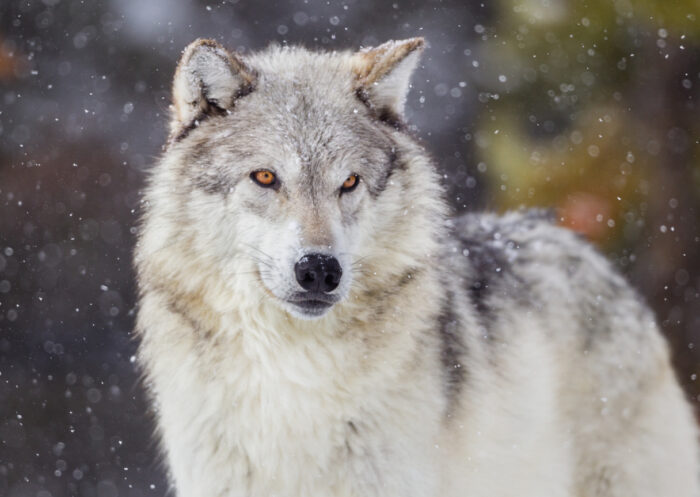
A lone wolf in nature is a lonely wolf, a vulnerable wolf, a wolf that is likely to live a short life because it does not have the protection of a pack. A solo attacker may have been a lone wolf at the time of the attack. However, before the moment they decide to act, a “lone wolf” attacker is not truly alone. Often they are part of a “pack” that stimulates and inspires them to action.
While wolves might not stay with the same pack their entire lives, this doesn’t necessarily mean they want to wander alone. Adult wolves will leave their pack in order to find a mate and their own territory in order to start a new pack. Wildlife biologists call these wolves “dispersers.” Their goal is to eventually be supported by a new pack. Dispersers bring new wolves into the gene pool and also disperse the family group into new territory, guaranteeing enough resources for the survival of the extended family. The survival and flourishing of the extended pack drives the lone wolf’s actions.
Lone wolf terrorists act on the encouragement they receive from terrorist organizations or hate groups, who then can claim victories for actions that cost them nothing. Online, ISIS is known to promote ways of creating and using weapons to target their enemies. The reading groups of the Daily Stormer, a white supremacist organization, take their marching orders from the editors and writers behind the website, as well as the public leaders that echo their rallying cry.
The wolf pack works together to accomplish shared goals. Each member of the pack does not necessarily have the same job. Some of the wolves hunt, some nurture and teach the children, and some guard their territory. In the pack of a hate group, some are the face of the movement inviting others to talk like them, act like them, and join them in hate activity. Others stay hidden from law enforcement and the courts, using their platform to exhort others to act against the group’s enemies.
When cyber-terrorists led by Andrew Anglin of the Daily Stormer website targeted my family, along with other Jewish families and our community in December 2016, there was a clear pattern in the communication. First, Anglin focused on one shred of truth—a Jewish realtor and a woman allegedly connected to the hate group discussed a real estate transaction—and spun a story that demonized the Jewish woman and portrayed the seller as the preyed-upon victim. Next, Anglin characterized the Jewish woman, and other Jewish community leaders like myself who were in relationship with her, as “bad people.”
With the support of Richard Spencer and David Duke, the public-facing leaders of the neo-Nazi, white supremacist pack, the Daily Stormer staff spread their call to arms far and wide. Their readers became a vicious pack focused on harming our community. The Daily Stormer editor encouraged their pack to create “an old-fashioned troll storm,” to terrorize us with threatening messages and teach us a lesson. They also repeatedly encouraged this pack to “show up and tell these bad people what you think of them.”
Seven months after the attack on our community, this same activated pack of angry, hate-filled men showed up in Charlottesville, Virginia. Here in Whitefish, Montana, though, the pack never showed up. I think the difficulty and expense of getting to our northwest tourist town, and the -15 degree Fahrenheit weather, was just too much for them. Earlier in February, 2015, a “lone wolf” terrorist showed up in our community threatening “to put two in the head of a rabbi” and open fire on schoolchildren. Because of the noise this individual caused online, and because of the willingness of an online observer in Maryland to contact local law enforcement in Montana, the “lone wolf” was arrested and the attack was prevented.
If solo violent actors follow a pattern of behavior or publicly share beliefs supporting acting against their enemies, maybe it is possible to identify “lone wolves” before they take action. Maybe it is possible to identify “lone wolves” and bring them into a community pack that offers them a better future.
A lone wolf in nature is more likely to be hunted rather than prey on others. And, according to research by Dr. Edy Cohen, the lone wolf terrorists are solo actors who seem aware that they will most likely not survive the attack they are planning. Therefore, before the planned attack they often ask people close to them for forgiveness, settle up monetary debts, and express their motivation to take action in handwritten or online messages. Dr. Cohen states that “studying attackers’ motivations and behavioral patterns reveals that many such attacks can be prevented.”
A large segment of the population has glorified the title of “lone wolf” and treats it as a badge of honor: a “lone wolf” is believed to be a strong individual who lives independently and freely. We know from nature that this is just wrong. A wolf without a pack is a wolf with a grim future. A wolf without a pack lacks protection from prey and the resources a pack distributes for survival.
If solo violent actors follow a pattern of behavior or publicly share beliefs supporting acting against their enemies, it is possible to identify “lone wolves” before they take action. Maybe it is also possible to identify “lone wolves” early and bring them into a community pack that offers them a better future.
Pastor Lou Kavar reminds us that communities are not just people who share a similar zipcode. “Instead,” he writes, “a community is a group of people who have fellowship with one another, who take an active interest in the well-being of each other, and who grow together. That’s really what wolf packs do.”
I believe we should focus on the role of the pack for the solution. As local communities, let’s find ways to engage so-called lone wolves to offer them purpose and belonging that builds, rather than harms, the community.
To promote the health and well-being of its diverse residents, a wolfpack community must bring members together to share their hopes and dreams, as well as their fears and concerns. There are so many opportunities for this. Does your community have playgrounds for young kids as well as play-spaces for older children such as basketball courts, skate parks, and swimming pools? Does your community have winter activities that bring people outside to play like sled hills and free ice-skating parties? There are 8700 farmers’ markets across the country. How are they engaging people in ways that promote belonging, help members of the pack get to know each other, find like-minded people, and meet people who hold different political viewpoints yet share desires for fun and safety?
Communities plan for commercial growth and housing opportunities. They should also plan for ways to identify the strengths and struggles of their pack so that they can care for each other and build a brighter future than that of the “lone wolf.”