
The days of “Tell her you’re sorry” followed by another child’s lowered eyes, shuffling feet, and then a brisk “sorry” are over. At least in some places. I share this news as a parent and a former preschool director, current religious school director, and educator for all ages.
In preschool, we helped children recognize the signs of the impact of small or large, intentional or unintentional harm: “Do you see he’s crying?” or “Do you see how her face is red and she is breathing quickly? What else do you notice about her face? How do you think she is feeling right now?” Earlier this month, I heard a child get one of those perfunctory “sorrys” and respond with, “Well, I need you to say that in a way that actually feels to me like you mean it.” The person making this request was seven years old.
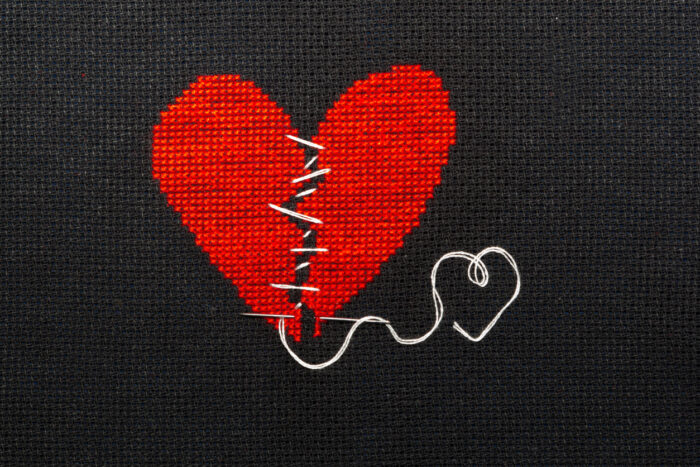
As an education director of a Jewish religious school, I felt it was time to create a straightforward template for children and adults to point to specific values that felt “broken.” In 2018, I put together eight Jewish values that could help move conversations towards specific pain and repair–a “Tikkun (Repair) Protocol.” Teachers practiced these protocols with each other and then brought them into the classroom. Children began using this protocol in my office every week, particularly siblings who got to practice new ways of listening to each other and responding.
This “Tikkun Protocol” was not a panacea, but it did help each person have the time to be heard, their feelings acknowledged, and their needs attended to. Eventually, I used the idea of this protocol in my application for one of the most prestigious fellowships in the Jewish community. If I received the fellowship, I would utilize my fellowship time and resources on further research and application of the protocol to specific harm and repair in the Jewish world. This was in the middle of the Covid pandemic, when I had just begun having nightly, visceral, and vivid flashbacks caused by childhood trauma and abuse. It was in this environment that I attended my final round of interviews for the fellowship. Things were progressing well; there was easy banter and engagement following a teaching I shared and some Q&A from the panel. Then, in closing, a member of the panel asked me, “Tehilah, why do you care about perpetrators so much?”
To clarify, I deliberately applied to this fellowship with the Tikkun Protocol in mind as it would relate to institutions and individuals who had caused harm and abuse within Jewish settings. I could not have applied to this particular fellowship with any other project in mind; I knew where the fellowship funds were coming from, and I knew firsthand and secondhand how pervasive the harm they had been associated with was. In a post-#MeToo era, I, along with other survivors, was appalled as we watched the Jewish community pay lip service to the cause of stopping and healing abuse. I witnessed how survivors struggled with the message that it was supposedly safe to come forward now. Despite there being no new processes or protection. Often survivors who chose to come forward were then blamed for ruining the lives of innocent family members of the perpetrator, who was only now being held accountable due to the survivor’s revelations.
The question of why I was so concerned with perpetrators, or rather the committee’s seeing this protocol as solely about perpetrators, floored me. This was a room full of intelligent, accomplished leaders. We went through rounds of interviews where they read my application and intention. The fact that they had missed my message of requiring a process with perpetrators, in order to ensure greater survivors’ safety, being heard, and being promised something other than a brief bowing out of public life before returning at any moment, without any substantial change, horrified me. I shared some of this idea: I was much more concerned with survivors. I cannot be certain of how coherently I did so. I do recall hearing myself saying these words: “I am not concerned about perpetrators at this time.”
I did not receive the fellowship.
In this week’s Torah portion, Vayikra, “And (God) called out,” we read a litany of sacrifices brought to the temple for various purposes. It’s a lot of meat, some gore, and for some of us perhaps too many details about animals and sacrifices that we do not participate in nor hope to. But a beautiful piece of this portion is about acknowledging mistakes publicly, whether it is the common person, the leader, or the entire congregation.
One of my adult students and I spent significant time imagining what this experience might be like: to recognize a mistake or be called out for it and to sacrifice such a huge portion of your wealth, publicly, to name the mistake and commit to not doing so again. What does a community require to foster an environment where someone can be held accountable or become accountable in this way? Especially when ancient cultures, like Judaism, were so deeply concerned with shame and humiliation? Looking at later texts, particularly the scholar Maimonides’s famous process of teshuva, which featured returning or healing human-to-human mistakes, we saw a culture concerned with individual needs for repairing harm. We wondered why our own Jewish communities moved from systems of accountability, care, and repair to systemic cover-ups and disregard for individuals in service of institutions.
In another one of my weekly adult education courses, we study Jewish texts, rituals, and values based on themes culled from the previous week’s news headlines. Last week, we were discussing the Epstein files, ICE, war, Zionism and anti-Zionism, while weaving in our question: “In Judaism, what—if anything—is unforgivable?” The Torah is pretty sparse on answers to this question, and many students came to class assuming nothing was unforgivable in Judaism.
Imagine that. Imagine living in a world where you really do believe that through work, dedication, seeing the other, and listening to their experience, pain, and need, you could find healing, you could find forgiveness, and you could feel healed enough to want to forgive. We are nowhere near this world of Vayikra, in which we would have clear public systems for accountability and the start of mending, let alone the awareness that even God cannot forgive the wounds inflicted on a human being; only the harmed, only the survivor, can do that.
But I am not interested in forgiveness right now. Forgiveness centers those who harm. I am interested in a process of repair that acknowledges harm and focuses on what the harmed person needs to feel safer again, more whole again; to receive dignity. In essence, to have their personhood returned to them by people and systems that treated them as expendable objects, lesser humans, or even less than human.
Our Torah portion is filled with modifications in the repair process; people’s resources and mistakes are different. Maimonides’s repair process reminds us that those we seek repair with have different needs. While there is personalization to these processes, the paths to repair with the Divine and human-to-human are clear. This is an ancient, human need, and we have meaningful roadmaps to use to center the needs of those who are harmed over the institutions or individuals causing harm.
Whether we worry about the Jewish future or our institution’s future, we can and we must take the safety, care, and repair for the people in our midst seriously—as seriously as the Israelites did as they built a society from scratch, in the shadow of a culture built on the commodification of others.