
When I try to summarize my life over the past two years, only two events come to mind: October 7th and the birth of my first child, Zusha. October 7th came first, about two weeks before my wife’s scheduled conversion to Judaism. During those two weeks, I was busy as an Israeli-American immigrant leader responding to our Israeli-American community and dealing with my personal trauma. But in the moments before I fell asleep, a question kept rising within me: Should I ask my wife to cancel her conversion, so that Jewish trauma wouldn’t claim her, too—and, through her, claim my son Zusha?
At five in the morning, we got into an Uber to catch the train from Philadelphia to NYC for the Beit Din (conversion court). The name that appeared on the Uber screen was Hashem. After interrogating the driver—as Israelis do—I learned his grandfather had been a Sufi sheikh in Turkey who named him after the God of the Jews. My wife and I laughed with joy. We knew: the God of the Jews was accompanying my wife, through this Muslim driver, to join the Jewish peoplehood.
In the two months between October 7th and Zusha’s birth, I felt guilty about bringing him into such a fractured world that I couldn’t promise him would improve. As the son of a Holocaust survivor whose entire family was murdered, faith in humanity does not come naturally to me.
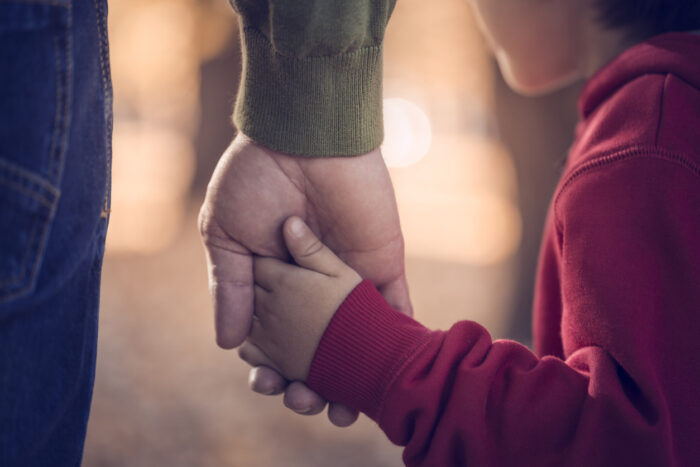
When Zusha was born, I made a promise to my son: I would teach him tikvah. I would teach him Jewish hope.
Jewish hope is not optimism, which I would define as an unexamined belief that the future will be better. It’s something different.
The Hebrew word for “nevertheless” is af al pi chen, literally “despite all this.” Despite the burdens of trauma that we carry from one generation to the next, we choose hope.
A century ago, the Hebrew writer Yosef Haim Brenner refused to romanticize Jewish immigration to Palestine. He knew the cemeteries—like the one at Kibbutz Degania, the earliest pioneer settlement, founded in 1910—were filled with the graves of young pioneers who had taken their own lives. Brenner wrote, “All of this must be known throughout the Jewish Diaspora. Only that pioneer—the one for whom this ‘nevertheless’ has become part of his very bones—only he is permitted to come. He and no other.”Tikvah is not optimism, but defiance.
The greatest difficulty I experience in my work as a Jewish leader is not that people disagree with my positions. It’s that those who would call themselves progressive refuse to engage with me at all. Once people label me as a Zionist, the conversation is over before it begins. My identity becomes the sin—and the righteous don’t speak to sinners. This is unfortunately something we also do to those we disagree with.
Jewish hope demands the opposite: to see the person, not the category. Primo Levi understood what happens when we fail at this task. He described a Nazi officer looking at him in:
That look was not one between two men; and if I had known how to completely explain the nature of that look, which came as if across the glass winter of an aquarium between two beings who live in different worlds, I would also have explained the essence of the great insanity of the third Germany.
My task as a Jew is to see each person as unique—as carrying, the Mishna says, an aspect of the divine image that has never existed before and never will again. Jews who are right-wing and those who are left-wing, a baby in a shelter in Israel and a baby in a tent in Gaza.
Viktor Frankl, who survived Auschwitz, made this point about human freedom in his book Man’s Search for Meaning:
Everything can be taken from a man but one thing: the last of the human freedoms—to choose one’s attitude in any given set of circumstances. Even there, he can maintain his human dignity.
Only when I see every person as capable of choice can I also demand that they choose morality. They can demand an account of my actions, and I will demand the same of them. As bearers of the divine image, we are always on the same side—the human one.
When we tell our youth “Never Again,” it must be a promise of building hope through action as a community. If we keep that promise, it creates hope for our young people. But if we invoke that promise without action to back it up, we will wound our youth through our hypocrisy. If I say these words to my son while sitting on the couch in my living room with no plans to act on it, I am lying to him.
“Never Again” must be spoken in the streets by a community that marches, protests, and refuses to stay silent in the face of both antisemitic acts and attacks on other marginalized communities. When an antisemitic incident occurs and the response is to increase security at synagogues, we are not fulfilling this promise. That is solely an internal solution.
Our tradition demands even more of us than our insistence that the world not harm Jews. The Torah understood that Jews would become the ultimate minority, and therefore obligates us to carry this role on behalf of every marginalized community —to teach by example that no minority should remain silent in the face of injustice. I know that my Zusha will be part of a minority, and the Torah compels me to remember that this status carries with it a responsibility to every other minority. Jews carry the banner of the few—not so that others will pity us, but so that the marginalized everywhere will recognize their ally and see us use the unique Jewish light to dare to protest the wrongs done to them. As Rabbi Abraham Joshua Heschel said, “No religion is an island.” And as Chava Alberstein sings in “Rikmah Enoshit Achat (One Human Fabric)”: “Yes, we are all / all of us one living human fabric.”
The reality of recent years could weaken our resolve. The number of mornings that I wake up, look at my sweet Zusha, and feel that I am betraying him by raising him as a Jew keeps growing: Have I condemned him to a life of trauma because he is Jewish? But we Jews are foragers, gathering hope where we find it. Each time I choose, despite my fears, to show up as an activist, in the public sphere, and build Jewish hope, I am healing that woundedness of my family and of my people. My every choice to act my Jewish hope rectifies the primal fears of my ancestors, who did not have the agency to act.
Perhaps simply choosing to live among people is the hope we need. To smile at the person in front of me. Perhaps it’s being like Hashem, my Uber driver: to say yes to someone else’s journey.