
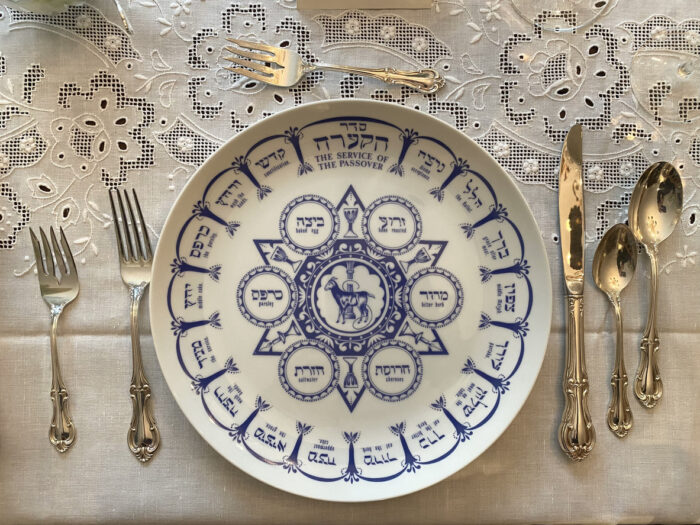
The holiday of Passover is just what we need, when we need it most. Not only that, what we experience during seder can travel with us throughout the year. Seder rituals can be tools of well-being and resilience that we can call up whenever we feel the need for strength or joy.
I understand that “resilience” is a term used a great deal in these times of stress and trauma, so I want to offer a simple definition: Resilience is our capacity to move through life’s ups and downs with balance, so that we can bring our best selves to every moment. The more stress and anxiety we experience, the more our resilience capacity—or “resilience zone”—is depleted. When we practice wellness skills such as Resourcing, we expand our capacity for resilience.
The Jewish approach to life is often head-centered. We ask questions. We tell stories. We debate the justice and injustice of nations and leaders. We pore over historic texts looking for the answers. If we only stay in our head this year, we are missing out on some of the greatest wisdom of Jewish survival.
The rituals of Passover are mainly body-centered practices that teach us how to live through life’s ups and downs while maintaining our values and perspective. The seder shows us that we have the capacity to taste bitterness without sinking into despair, to know suffering without pushing it away, and to celebrate life’s blessings without clinging to false positivity. The more fully we experience the seder journey from disgrace to praise–as the Talmudic rabbis described the seder (Mishna Pesahim 10:4)–the more fully we can understand how to survive and even thrive with a greater capacity for resilience.
This Passover, we can use the embodied rituals of Passover to create a library of experiences that we can draw upon as resources to re-experience strength, calm, or joy when we are struggling—and build up our resilience for life after Passover. We want to impress the rituals into our bodily experience by using all of our senses. The more we intentionally engage all of our senses and slow down to feel and experience them in our body, the more we are creating neural pathways of healing, growth, strength, joy, or calm.
The process of growing our resilience zone starts with the skill of tracking physical sensations within our body. Each emotion, each experience, and each thought generates a neurological, physical response in our bodies. As we bring attention to how an experience feels in our body, we have the freedom to decide how we should respond. We can seek out more pleasant or more neutral sensations when we notice unpleasant ones. We can bring a resource of sweetness and nurturing to unpleasant sensations. We can savor the healing power of pleasant or neutral sensations.
I recommend that at each step in the seder we ask ourselves:
How many senses can I engage in this step of the Seder? When I slow down to experience each step of the seder with my senses, can I feel the physical sensations in my body and rest in the feelings that are pleasant and life-affirming? Can I notice my internal capacity to access healing and enjoy it?
Each step of the Seder invites us on the journey—to remember the past, to experience the fullness of the present moment, and to dream about the future with hope. I invite you to engage all of your senses with each step of the seder and notice how a ritual impacts your body as well as your mind.
Where is there constriction and where is there freedom? Which ritual acts help us embody strength and joy? Which rituals invite calm and hope to inhabit our beings?
Kadesh
The first two rituals of the seder, candle-lighting and the blessing over the wine—Kadesh—are rituals that we perform at the start of Shabbat and every holiday. These rituals mark the transition from secular time to sacred time. With each of these rituals you could look around the room and read the blessings with the following questions in mind:
How is this candlelighting different from other candle-lightings? How is this Kiddush—blessing over the grape juice or wine—different from Shabbat Kiddush?
Look. Smell. Listen. Touch. Taste.
Ur’khatz
Ur’khatz marks the transition from non-Passover time to Passover time.
There are two hand-washings in the seder: Ur’khatz—without a blessing before eating the parsley dipped in saltwater—Karpas—and later in the seder Rakhtza—washing with a blessing before eating Matzah. Often, only the seder leader does this washing, but I encourage you to invite everyone in the seder to wash, quietly, with no words or blessing, just listening and feeling into your body from the inside out.
What are you washing away so that you can enter the fullness of the Passover experience? How can this washing expose your heart and mind to hope and courage?
While the rabbis give us the elevating narrative arc of journeying from disgrace to praise, darkness to light, and enslavement to freedom, our Passover rituals titrate the experience. The seder order moves us back and forth, pendulating between these two states. We taste the bitterness of the parsley and salt water yet we enjoy the greens reminding us that spring is arriving.
Karpas reveals the fact that new growth can appear after the dead of winter. With the taste of tears comes the reminder that growth is always available to us. Just like that parsley plant that grew from a seed, nourished by dirt and sunlight, we, too, can grow and flower after difficulties and challenges.
Yachatz
The fourth step of the seder is Yachatz, the breaking of the middle matzah in a special stack of three pieces of matzah. This step is also frequently performed only by the leader of the seder. I encourage you to invite each person to take a piece of matzah into their hands. At this moment, they are not going to eat it, but they are going to experience it with their other senses.
Before breaking the matzah, smell it; how would you describe the smell of matzah? Look at the matzah; what do you notice? How do you describe this piece of foodstuff? Is it a culinary delicacy or a gourmet addition to any meal? When you touch the matzah, what sensations do you notice?
The haggadah teaches us that matzah is the bread of affliction, “lechem oni.” Matzah represents the start of our story. It represents poverty, thirst, and the savoring of dry, simple scraps of food. We also know that matzah is the bread of freedom, eaten during the festival of freedom.. Why do we eat unleavened bread? Because we did not have time for the bread to rise as we packed our belongings and left Egypt as free people. Matzah’s dry, brittle nature symbolizes the vulnerability of those who suffer. Matzah’s ability to transform into knaidlach and popovers symbolizes the capacity for growth, joy, and freedom available to us as we celebrate the holiday.
Maror and Korech
Charoset is another seder symbol that holds both suffering and joy. The haggadah tells us that we eat it to remember the mortar we used to bake bricks while we were enslaved. The bitterness of enslavement is found in the spices of cinnamon or nutmeg and the dry bits of crushed nuts; and yet, overall, charoset is the treat that so many look forward to eating at seder because of its sweetness.
Bitter and sweet, enslavement and freedom–all revealed in the taste of Charoset. Can you taste both?
After the meal, the verses of grace after meals and Hallel are meant to lift us up. They invoke our blessings and lead us to express gratitude and joy.
As you read and sing, do not forget to bring awareness back to your body. Your belly might feel heavy. Is that pleasant, unpleasant, or neutral for you? As you sing, what do you feel in your face, chest, and hands?
I’m usually pounding on the table to keep the singing lively. As I feel my hand meet the table, I feel the joy in my body that I also felt at tables of Passovers past.
As we arrive at the end of the seder, the haggadah gives us the gift of hope. It is my experience that trauma can give us the sense that we are broken, that there is no hope of a different reality. Only when I was able to find safety and resilience was I able to access hope and growth after trauma. In every generation, there have been enemies attempting to destroy us. In every generation, we have survived. No one can take away our ability to hope and dream up a new future. That is the last lesson of seder.
As you conclude your seder with the fifteenth step of Nirtzah, I encourage you to look around the table again and ask yourselves:
What gives us hope? What experiences of seder can we bring into the post-Passover world? Which seder memories can we call up when we are in need of strength and joy, resilience and hope?
It is all available to us, this year and every day. The more we utilize the rituals as resources of resilience, the better we will be at finding the answers to all of our questions.
Chag Sameach! Happy Passover!