After the thunder and lightning, and the sound of the shofar comes to an end, and the last echo of the divine revelation recedes, the Torah reading turns to an unexpected topic: the dos and don’ts of building an altar. These instructions end with a detail that seems both too technical and perhaps, too graphic.
“If you make Me an altar of stone… you shall not ascend My altar by steps, so that your nakedness not be exposed upon it.” (Exodus 20:22–23)
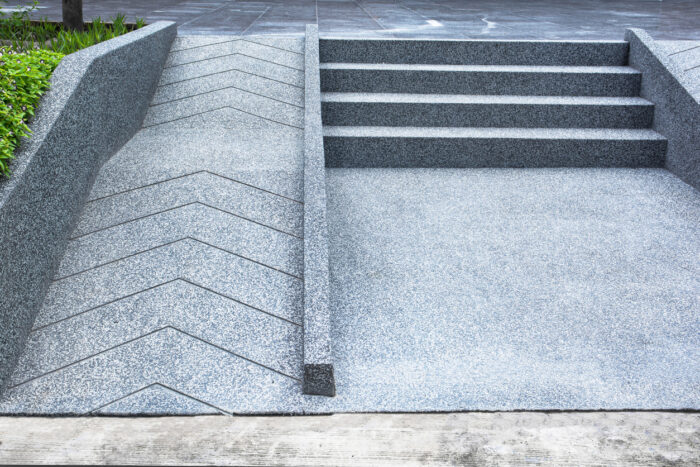
No steps. Only a ramp.
At first glance, this seems like a technical detail. Yet, the sages sensed something deeper. The Medieval Commentator, Rashi, explains that steps require wide strides, which could expose the priest’s body. The Mekhilta goes further: if the Torah is concerned about the dignity of stones, which cannot feel shame, how much more must we be concerned with the dignity of human beings.
And that detail becomes the bridge into the next Parasha, Mishpatim, where we turn from revelation to ethics, from divine voice to human responsibility in the form of laws about property, compensation, and the protection of the vulnerable. Before any of these laws appear, the Torah emphasizes building the ramp to teach that holiness and human dignity go together.
Steps elevate quickly. They assume a body that can move in a particular way. They create hierarchy, separation, and exposure. In contrast, a ramp changes the posture of ascent. It is gradual and continuous, slowing us down. It allows more bodies to approach. It removes sudden hierarchy and transforms elevation into an act of shared dignity.
The ramp, and by extension Torah itself, teaches us to ascend to greater heights without a posture of domination or disrespect. Echoing what we say in our sanctuary, the Torah invites us to rise as we are able.
During Jewish Disability Awareness and Inclusion Month, this invitation is even more salient. Accessibility is often discussed in terms of compliance or accommodation. Do we have the right ramps, elevators, or signage? These are essential questions. But the Torah invites us to go deeper. The ramp at the altar is not an afterthought added to include someone who cannot climb steps. It is included in the design from the beginning.
It is important to note that this inclusion is not borne out elsewhere in the Torah’s instructions for the Mishkan and the world of Temple sacrifice. Explicitly, only certain bodies were deemed fit for service and there was an ironclad hierarchy of access dividing the priestly class and other Israelites. However, the description of the altar at this moment suggests that the sacrificial system becomes secondary to the ethos of Torah and justice. The Temple as it stood may have enforced unequal limits, but the Torah teaches us that our sacred spaces must be built with accessibility as their foundation.
This is not only about who can physically reach the altar. It is about how a community understands holiness. If holiness requires climbing over others, exposing others, or leaving some behind, then it is not holiness at all. The ramp declares that dignity is not secondary to worship, but is itself the condition of worship.
And this insight reframes how we understand Mishpatim. The laws that follow are not abstract regulations. They are ramp-shaped ethics: limits on power, protections for the vulnerable, attention to the dignity of workers, strangers, and those easily overlooked. Justice, like the ramp, is gradual, intentional, and grounded in humility.
Disability awareness asks us to examine not only individual attitudes but question communal structures. Who can enter easily? Who feels seen? Who is asked to adapt themselves to spaces never designed with them in mind? Often, the barriers are not malicious; they are inherited assumptions about what bodies can do and how people should move through the world.
The ramp challenges those assumptions. It reminds us that inclusion is not an act of generosity extended by the powerful, but is a recognition that holiness itself demands a different way of designing and building.
There is a deeper spiritual lesson here as well. The Torah could have imagined ascent toward God as vertical, dramatic, and exclusive. Instead, the approach is imagined as gradual and shared. We do not leap into holiness; we move toward it together, making space for one another along the way.
On this Disability Awareness Shabbat, we are invited to ask what it would mean for our community to be truly ramp-shaped and to be honest about our own failings as well. Are our spaces and services available to all? Physically, sensorially, with regard to neurodivergence, and finances? Not only open in principle, but designed or redesigned with the full diversity of human experience in mind?
The Torah’s final image at Sinai teaches us something essential: before we build systems of law, before we claim authority, before we approach the sacred, we must learn that holiness requires access for each one of us, each in our own way.