
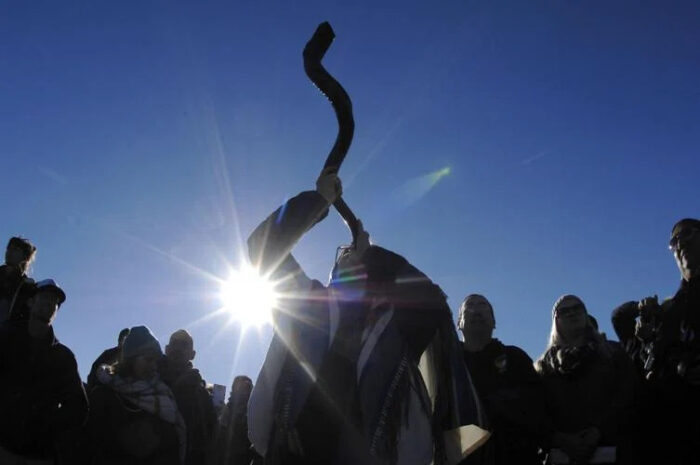
Photo by Mike McCleary
I want to challenge the commonly held belief that showing up is the measure of moral courage. I’ve learned instead that true allyship is defined by listening. You can be an ally or a liability depending on whether you follow the leadership of those most affected by injustice. Sometimes the most faithful act is not to lead or even appear, but rather to support others in the way they request.
In November 2016, a call went out asking faith leaders of all religions to come to Standing Rock in support of the Water Protectors resisting the Dakota Access Pipeline. After months of militarized responses to peaceful protest, spiritual leaders requested a multi-faith presence to strengthen morale at a critical moment. Elders carried generations of historic trauma; youth were determined to protect their future. The community asked for allies.
I live in northwest Montana. I realized that if I left before dawn, I could drive fourteen hours and arrive at Oceti Sakowin by morning, in time for the prayer gathering. I slept a few hours in my car and entered the Water Protectors’ camp through a long corridor of flags representing tribal nations from across the United States.
The camp was organized in widening circles—housing at the edges, communal work and ceremony at the center. Signs directed volunteers where to go, where to sit, where to serve, and where not to enter. Donations were sorted and distributed. Food was prepared. Ceremonial space was clearly marked. I found a posting instructing volunteers to sit and listen for announcements. When a task was named and you were able to help, you stepped forward.
So I sat.
I watched Native and non-Native volunteers working side by side. I listened to instructions. I entered the morning water ceremony respectfully, participating only when it was appropriate.
Later, we walked toward the line of law enforcement near the blocked Backwater Bridge, keeping our distance from escalation points. Hundreds formed a prayer circle. One by one, faith leaders stepped forward. I found two other Jewish women wearing tallitot (prayer shawls). When it was our turn to represent the American Jewish community, I blew the shofar as a call to justice, and my partners offered prayers for peace.
The prayers were meant to uplift the Water Protectors, to strengthen hearts and spirits after months of confrontation. But as the circle continued, something shifted. The longer non-Native voices filled the space, the more Native participants began drifting away. Some moved toward the edges. Others returned to their responsibilities in camp.
In the distance, I heard chanting. A group of Native American men stood on the bridge holding American flags, some wearing their military uniforms. Their voices rose in rhythm and language unfamiliar to me yet resonant. I walked closer and listened to their prayerful chants. I later learned that the melodies were passed down orally and that younger men were encouraging elders to share traditions so they would not disappear. I shared with them the story of Yiddish and its reinvigoration with a new generation.
At Oceti Sakowin, I learned how to be an ally by approaching in silence and listening for direction. I learned that allyship has boundaries and requires consent. There were spaces I could enter and spaces that were not mine. There were supplies I could take and food that was not for me. There were moments to speak and moments to step back. Allyship cannot simply be spontaneous moral expression; it has to include disciplined restraint in service of someone else’s struggle.
Just weeks later, my own community became the one in need of allies.
White supremacists targeted Jewish leaders and families in Whitefish, Montana, through coordinated cyber-harassment. They threatened to hold an armed Nazi march in our town. Our Jewish community was small and we feared not only violence, but that public spectacle would harm relationships with our neighbors. The winter tourist season depends on snow, safety, and carefree strolling downtown.
My voicemail and inbox filled with messages from rabbis and Jewish leaders around the country. They wanted to come and stand with us. They wanted to face down the neo-Nazis. But over and over, I said, “Thank you—but please don’t come.”
Local law enforcement and civic leaders made a strategic decision: The town would go dark on the day the march was rumored to occur. No confrontation. No cameras. No spectacle. White supremacists feed on attention. We would deny them oxygen.
We were not passive, though. A local human rights organization organized a community gathering indoors, away from the proposed march route. Our Matzo Ball Soup Brigade served more than 350 bowls of soup. Neighbors played games, children laughed, and conversations flowed. We affirmed the values that truly defined our town: kindness, diversity, and walking the talk.
A handful of Orthodox rabbis came anyway. They posted videos on social media. They issued press releases about visiting the police station and affixing a mezuzah to the Christian chief’s office. One published a national op-ed framing their visit as a celebration of Jewish resilience. Meanwhile, our celebration was with our neighbors in a secure location.
Their intentions may have been sincere, but their presence drew media attention, demanded scarce resources, and reignited the story. The harassment that might have faded quietly stretched on for weeks. By ignoring the community’s request, they extended the suffering we were trying to extinguish. Whether they ignored my request because I’m not an Orthodox rabbi, or they ignored it because of their calling, I do not know. I do know they caused harm with no remorse.
At Standing Rock, I was taught to wait for direction. In Whitefish, I found myself begging others to do the same.
Spiritual activism can take two forms. It can be pastoral—offering care and quiet presence to those who are suffering. Or it can be prophetic—raising a moral voice against injustice. Both are necessary. But both require the same first steps: Ask what is needed, listen without ego, and then act without compounding harm. Overriding a community’s expressed needs in the name of moral urgency risks reenacting the very dynamics of power we claim to resist. We should not, in our allyship, center our voice in someone else’s struggle.
At Standing Rock, listening looked like recognizing that even prayer, offered too loudly or too long, can displace the people it intends to support. In Whitefish, listening looked like believing that sometimes the most powerful act is to refuse the spotlight. I was told that the teacher of one of the visiting rabbis instructed his followers to show up no matter what—regardless of what the community says it needs. That philosophy may feel bold, but sometimes courage means allowing a community to define its own strategy—even if it contradicts our instinct to rush in.
At Oceti Sakowin, I blew the shofar when invited. I also learned to put it down when my voice was no longer needed. Sometimes, allyship requires you to step forward. And sometimes it requires you to trust that the most faithful act is not to be seen at all.