
At every major milestone in my life, there comes a moment where I look in the mirror and fixate on the same thing. In this recurring moment—in preparation for which I have learned, and crafted, and controlled—every time, I kid you not, I stare in the mirror, back at the resounding, rebounding, ever-present cowlick above my forehead. No matter the product or form of heat, this force pops back up, reminding me that I in fact have no control.
This used to bother me far more than it should have. Especially at moments like semicha (rabbinic ordination), when I spent five years preparing for one sacred milestone, only for my well-intentioned friend to tell me, “Your hair looks like a 7 out of 10 because of that thing in the front. I’m just being honest.”
My dad passed away the day before Shavuot last year, in that strange threshold right before revelation, and the news crashed over me like a wave. Even at the time, it made sense to me in my bones that this is when I would lose him. I remember thinking: I will never be told I lost my dad again. That moment had now happened to me. Me, at 33. And suddenly, I felt unmoored.
And then, almost immediately, I became attached to everything that suddenly felt fleeting. Every sweater donated was devastating. Every voicemail I had ignored for years became precious.
In some ways, I had practiced missing him for years already. But once he died, I realized I had run out of chances to ask him any of my remaining questions. I remember comparing it to a kind of show you’ve grown tired of, but then suddenly it’s taken off the air. The repetition is gone, but so is the world itself. And the silence it leaves behind feels disorienting.
I know very little about my dad’s family. I know they had run an Orthodox shul in Philadelphia. I know my grandfather was a grocer—the kind where people in Philly still occasionally recognize his name. But that’s as far as my family inheritance goes. I had never felt belonging among them. And then, with my dad gone, it felt like the thin threads were evaporating into the ether.
In these last few weeks in the Jewish liturgical calendar, we have started reading the Book of Numbers, or in Hebrew Bamidbar. The beginning of the book is obsessed with lineage. Names. Tribal formations. Family structure. The Torah repeats phrases like 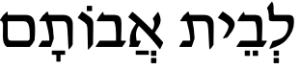 —”according to their ancestral houses.” The Israelites are counted not only as individuals, but as people embedded within generations and communities.
In describing the way the Israelites are encamped, the Torah explains that they are grouped not only by ancestral houses but also under “banners.”
Each person shall camp under their banner, with the signs of their ancestral house. The Israelites shall camp around the Tent of Meeting, at a distance, surrounding it. (Bamidbar 2:2)
Immediately I wonder: This, of all things? Banners? Why would Hashem care about banners at all? What’s with the flags? Very Game of Thrones of us.
But then, in Bamidbar Rabba 2:3, we learn more:
HaKadosh Baruch Hu showed them great love by making them banners like the ministering angels at Mt. Sinai, so that they would be recognizable.

This midrash imagines that at Mount Sinai, the Israelites see the heavenly angels arranged in ordered groups with banners or standards, perhaps with their names or their identities on them. Inspired by this vision, Israel desires banners too. So God gives them banners in the wilderness “out of great love.”
But what does great love mean? And what does it look like when we don’t get the relationship we wanted in the first place, but only scattered pieces in the wilderness? What does it look like to call something beloved when everything feels broken?
To explain, the midrash continues and offers the following parable to expand our understanding.
There was a wealthy man who had a storehouse full of wine. He entered to inspect it and found that all of the bottles had all turned to vinegar. Just as he is about to leave, disappointed, he finds one barrel of good wine. He said: “This one barrel is worth as much to me as the entire storehouse.

The wealthy man could have left in disgust, looking at a warehouse of spoils and rotten things. A canon of bitter memories. Instead he stands there, holding one good barrel, and decides: this is enough. Sometimes one good barrel does not redeem the whole storehouse. But it gives you something to hold. Something sweet enough to carry forward. So too, the Midrash imagines love as something carried in visible signs. Among all the nations, Israel is given banners—symbols that say: even amid complexity, there is still belovedness worth inheriting.
But what does that love look like?
The rabbis imagine it differently—because maybe, as many of us learn, love is not one thing.
Rabbi Yehuda imagines love as spacious enough to hold complexity—difference and contradiction without collapsing the connection. Rabbi Chanina imagines love as accessibility—when someone powerful allows themselves to be approached and known without fear. Rabbi Yissachar imagines love as surviving imperfection. Even when attention wanders or communication falters, the relationship itself still holds.
Together, they suggest that love is not only clarity or perfection. Love is what allows people to remain recognizable to one another through complexity, intimacy, disappointment, effort, and return.
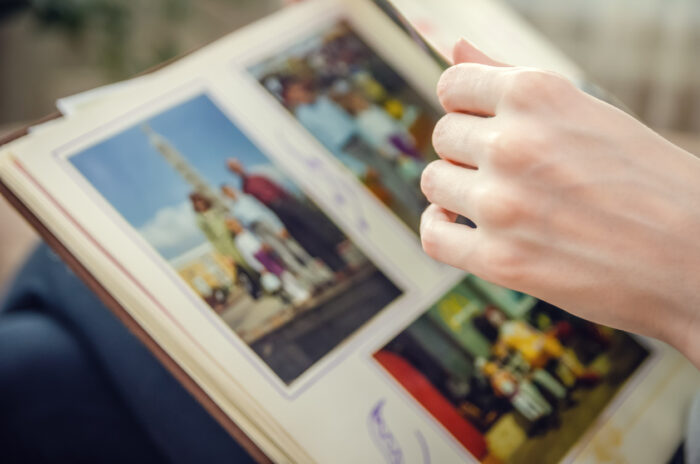
Sometimes our inheritance is our inheritance. So, when I received boxes upon boxes of family photos this summer and began to digitize them all, photos of people I’d never met and always dreamed of, I started noticing a pattern.
Light eyes. And cowlicks.
Relatives at the diner, at Hanukkah, on the corner stoop with a cigarette. And my dad, five years old on the Jersey shore—tan, beaming, sand between his tiny toes, and happier than I had ever seen him before. With a cowlick that stood straight up, right where mine is. The same spot I’ve tried to push down my whole life. Though I can prepare and prepare, what shows up, shows up.
The same way I received a really complicated dad in this life, I also have his love of shmoozing and ice cream for dinner.
Looking at these photos, I realized: my distance from him wasn’t a break from the line. It was part of the story I inherited. I inherited not just his mannerisms but his complications. And recognizing that—seeing it in old photographs—made me feel less alone in it, not more.
I imagine I will spend the rest of my life figuring out what exactly I carry from the people before me, especially now.
And I keep thinking about the setting of all of this work: the wilderness.
None of this happens in permanence. It happens in the midbar, the wilderness, a place without permanence or certainty. Real Torah emerges when we loosen our grip on control and certainty, when we become hefker—literally ownerless, open.
I have been thinking this year about how both of these things can be true at once: how untethered grief can make us feel, and how deeply we are still shaped by the people we come from.
In the Book of Numbers, even the Mishkan, the Tabernacle—holiness itself—has to be dismantled piece by piece to travel. We carry what matters forward, even when we’re untethered.
For much of my life, I have felt a little hefker. Untethered. Like I was searching for a camp to belong to. This year especially, in grief, I have understood how much human beings need places where they are recognizable to one another. Places where people carry you when you cannot quite carry yourself. Thank God we do not wander alone inside what we inherit.
Maybe that is part of what Bamidbar teaches: we travel carrying more people than we realize. Some through memory. Some through grief. Some through the small inheritances written into our bodies. Some through the people who show up for us again and again.
And maybe the banners matter because human beings need reminders that we are recognizable to one another. That we belong somewhere. That even in the wilderness, and across time, someone can still look across the camp and say: there you are.