
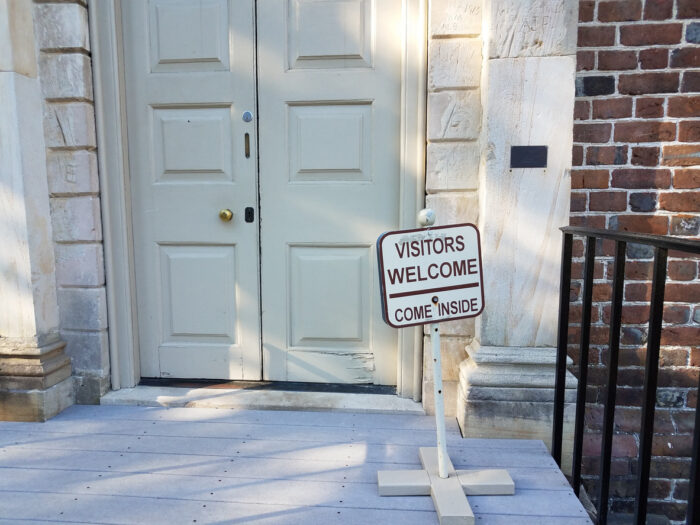
At a friend’s pool party this past weekend, I found myself in a conversation about synagogue (or, using the Yiddish word, “shul”) with a new friend who I had, appropriately, met at shul only a few months ago. His smile lit up his whole face as he gushed about how wonderful our shul is: how friendly and welcoming people are; how much help there is navigating the service, the scene; how there’s a crew of young folks to immediately swoop you up and invite you to Shabbat dinners, and game nights, and pool parties. He had been surprised, he said, because his shul was not like that growing up. “Synagogue was a place to feel anonymous, and to be confused.” A shul where people remembered you, where you felt supported, comfortable, and at home? It didn’t seem possible to him.
The fact that he had walked into a synagogue in his new city at all was a huge leap. With experiences like the ones he had as a kid, why would he even try? He’s glad he did, and I am too, and I don’t take it for granted.
My childhood experience was almost the opposite. I was the rabbi’s kid, and proud of it. At synagogue, I was welcomed as myself: Three-year-old me twirling on the bima until I fell in a fit of giggles. Seven-year-old me at Sunday Talmud class, beaming with pride at being taken seriously. Twelve-year-old me singing in front of the open ark.
That comfort carried over into adulthood. When I started doing Shabbat-in-residence visits in my early 20s, I took for granted how easy it was to slip into any new community. I felt okay rummaging for tea bags in the office kitchen, curling up on a pew when I got sleepy, and walking around without shoes. I would read all the plaques and excitedly guess what year the building was built and then renovated as an old-timer gave me a tour. It never even felt like a question: This is a synagogue, so this is home. I can be at home here.
Only later did I come to appreciate how rare this is. The first twinge was a few years into my career, sitting around the rabbi’s table Friday night after being the guest service-leader, part of a packed weekend of programming. The president, board members, and other machers (“big-shots” in Yiddish) in attendance, all men, were drinking shlivovitz and kvetching (Yiddish for “complaining”) about their low attendance numbers. “We sponsored a float in the Pride Parade!” bellowed one, pounding the table for emphasis with each word as he followed up with, “Why don’t people think we’re welcoming?!”
I stifled an incredulous laugh. Really? Maybe because what greets you at the door is a large poster proclaiming “Rules for Decorum in the Sanctuary.” Maybe because the bima is a foot or more off the ground. Maybe because the noise of children is immediately met with side-eye and shushing. “Please ask for my opinion,” I wished to myself that whole weekend. “I have so many ideas that might help you. Please just ask.” But they never did. So I never offered. (Even that synagogue felt like home to me. They all did. But gosh, they were making it hard.)
What I had, I realized, was synagogue privilege. It’s an idea I came to when appearing on The Yenta Podcast in January of 2025. I grew up believing that shul was my home, and so it was. But not all Jews feel that way.
When people find out that I’m a professional Jew, they sometimes start apologizing. “I haven’t gone to Temple since I was a kid,” they’ll say, sheepishly. A woman at water aerobics once shared, “We would go to synagogue on Yom Kippur. And the rabbi up there would talk about sin, and doom, and gloom, and it was so awful. It made me never want to go back.” “Of course,” I responded gently. “That sounds awful.”
I want to tell these lovely folks that they have nothing to apologize for. The last thing I want is to make people feel like they aren’t “Jewish enough,” and I do my best to talk and act accordingly. But a lot of Jews have deep and painful baggage from their past experiences with organized religion. I can be welcoming all I want, but the bigger hurdle is the welcoming they might extend to themselves. And they might never be ready to do that.
Shul people often gripe about why this or that group doesn’t come to shul. “But we’re so warm and welcoming! It says so on our website!”
First, the value prospect of shul, to the average Jew, isn’t the most appealing. Would you like to spend 1.5-3 hours, on one of your only two days off in this late-capitalist hellscape, singing in a language you don’t understand to a God you don’t believe in? Of course, shul people know that it’s more than that. But how would others? We can start by showing gratitude to the people that do show up, instead of kvetching about the many people who do not.
Second, many people sadly do feel like they “aren’t Jewish enough” to even step over the threshold, like there’s a minimum requirement of knowledge for entry: when to stand and when to sit, how to navigate the prayerbook, the melodies, let alone saying the words in Hebrew and what they mean. Judaism makes it so easy to feel like you don’t know enough. While we can work towards accessibility and making participation options clear, this is a barrier that some folks can’t overcome within themselves.
Third, your website might say that you’re “warm and welcoming,” but what does that look like in practice? Is there someone at the door who greets newcomers with sweetness, honesty, and tact? What questions do they ask? Are people friendly or scowly? Are newcomers given clear and kind invitations on where to sit, what book to use, how they might participate? Are they invited to Shabbat dinner? This takes intentionality in language, set-up, and messaging. It’s an effort. My own shul, the one that won over my pool-friend, had a very different reputation thirty years ago. A new rabbi made welcoming his priority, and changed the culture. It’s possible.
But no matter how many “good gathering” (in the language of Priya Parker) and welcoming practices you instate, there are still Jewish people in your community who will not go to your shul. Because they won’t go to any shul. There is too much trauma, too much baggage, too much pain. I have friends like this in my city, too. They’ll come to the independent events I run, but will not step foot in a synagogue, even though the programs are 85% the same. This is why it’s important for communities to invest in rich, Jewish life both inside and outside of synagogue walls. We need to meet people where they are—and some of those people, with good reason, are outside of the synagogue.
As in its use around race, “privilege” here is not meant to make one group feel bad for the ease they are afforded in life, but to invite us all to be mindful of the barriers, seen and unseen, that block access for many. For shul people, this means recognizing our own “synagogue privilege.” What allows me to feel at home here? How can I extend that welcoming to others? And can I recognize why others might not have the same privilege as I do, and seek to seed meaningful community for them, too?
I’m grateful that despite the odds, I keep meeting cool new people at shul. I’m grateful that they take a chance on this place, unsure of what it will be like, and that we rise to meet the occasion. I’m grateful that for some people, finding the synagogue is the first thing they do when they move here. And I’m grateful for the people that will never do that, and are a part of the fabric of our Jewish community, too. There’s room for all of us. I’ll see them at the next pool party.