
When I understood the biblical character of Moses as an adoptee, I finally accepted my own identity.
As an adoptee, I struggled to find where I belonged. While I was loved and raised to see my adoption as a miracle for my family, I still felt like I was lying when I drew a family tree with my (adoptive) parents at the base of the tree. If anyone asked me who my real parents were, I quickly and confidently gave them the names of my (adoptive) parents with a tone of indignation. Still, when I looked around at a large family gathering and saw my brother’s and sister’s inherited attributes on the faces of so many of our cousins, I wondered if I truly belonged. Was there another Hanukkah party happening in another part of the city where most of the people in the room had the same forehead or smile as I do?
Moses’ identity as an adoptee is such an important part of his mission. Yet, imagine telling someone learned in the Bible that you believe Moses is an Egyptian. They can’t tell you you’re wrong, but it is not the entirety of the story. In the first ten verses of the second chapter of Exodus, we learn that a baby was born to an Israelite woman, saved from the Nile by Pharaoh’s daughter, nursed and then weaned by his birth-mother, and then raised in the Pharaoh’s palace by his adoptive mother who named him Moses. Moses is an Egyptian with Israelite lineage.
Moses is adopted and this act of adoption is valued by the rabbinic imagination. How do I know this? While we learn the names of each of Moses’ family members as the Torah unfolds, Pharaoh’s daughter remains Bat Par’oh, the Hebrew translation of “Pharaoh’s daughter.” Yet, there is a rabbinic teaching that says God imitated this brave young woman’s actions by adopting and naming her:
Rabbi Yehoshua of Sikhnin said in the name of Rabbi Levi: The Holy Blessed One said to Bitya daughter of Pharaoh: ‘Moses was not your [biological] son, but you called him your son; you, too, are not My daughter, but I call you My daughter,’ as it is stated: “These are the sons of Bitya,” the daughter of God [Bat Yah]. Leviticus Rabbah 1:3
This midrash warms my heart. First, a non-Israelite woman adopts a baby and names him Moses. Then, the Holy One imitates her by adopting her as the daughter of Yah, which is one of God’s names. We are usually taught to watch how God acts in the world and then imitate God’s ways. In my mind, the reversal shows the significance and sacredness of the act of adoption.
Being adopted is part of Moses’ identity and it is critical to his mission. Moses is the bridge between Egypt and Israel. Moses knows how to act in court and speak to a king and he has childhood memories of sacred times in the tent of his birth-family with his birth-parents Amram and Yocheved, playing with his big sister Miriam. He is the leader who can bring God’s message to the Pharaoh and lead the Israelites to freedom.
God told Moses this when God called Moses to divine service from the burning bush. “Now the cry of the Israelites has reached Me; moreover, I have seen how the Egyptians oppress them. Come, therefore, I will send you to Pharaoh, and you shall free My people, the Israelites, from Egypt.”(Exodus 3:9-10)
Moses refuses the mission five times (Exodus 3:11-4:13). He can’t approach Pharaoh. He doesn’t know God’s name. He doesn’t think the Israelites will believe him. He’s not a good public speaker. He doesn’t want the job!
I think that the majority of this scene reflects Moses’ fear that he will not be accepted by the Israelites, his birth-family.
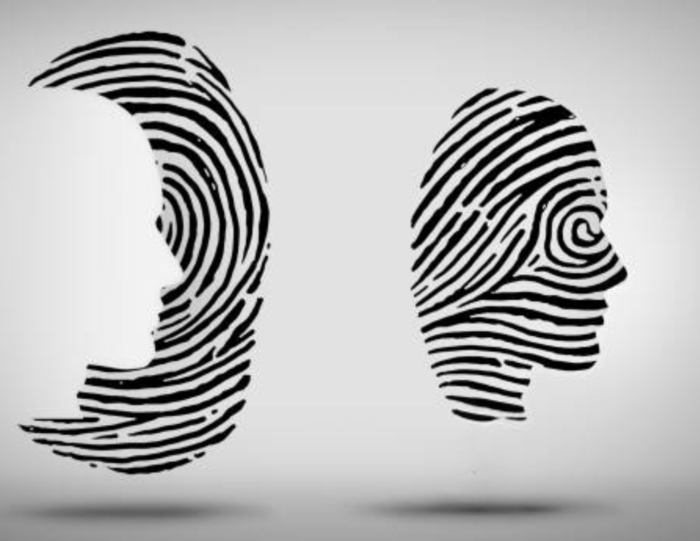
An adoptee is a person who straddles two families, two worlds. There is the world you know from your upbringing and the world from which you were removed. Sometimes neither world feels like solid ground.
Those of us who were adopted at birth, or as infants, do not have any conscious memory of our birth-family, while Moses was with his birth-family until he was weaned, most likely at the age of three years old. He may have fuzzy memories of Israelite life, but nothing solid to give him confidence that he will belong there.
Because of my own questioning about who I was and where I belonged, I could read the Torah and see the ambiguity of the text as a reflection of Moses’ own wrestling with his identity. Going back to the second chapter of Exodus, verse eleven tells us that after Moses grew up he went out to see “his brothers” or his “kinfolk.” He saw Egyptian taskmasters and Israelite slaves. Which are “his brothers”? The text is uncertain, as I imagine Moses was.
After his calling at the burning bush, Moses tells his father-in-law Yitro that he wants to return to Egypt to see “his brothers.” And again we can ask: Who are Moses’ brothers—the Egyptians or the Israelites? And I would answer: Yes! They are both his brothers. This is what makes Moses the best messenger to speak to both peoples and work for liberation, redeeming the slaves and liberating the enslavers from the dehumanizing position of taskmaster.
Understanding Moses’ identity as an adoptee eased my acceptance of my own identity. I was adopted, just like Moses—the greatest prophet, the boldest leader, the confidant of God. If God chose Moses to lead the people of Israel, then an adoptee is a person with great potential and special skills.
It is my hope that every adopted child grows to know and honor that they belong to at least two families—the family of their birth and the family of their upbringing. While the ground does not always feel stable, the identity of being adopted brings many blessings. One of those blessings is the understanding that one can stand in two different identities at the same time.
We all adopt people into our families and create lives of meaning and purpose together. We all stand in multiple worlds at the same time. Maybe if we could understand that and wrestle with it as Moses did, we could all find our superpowers to bring more love and liberation into this world.