
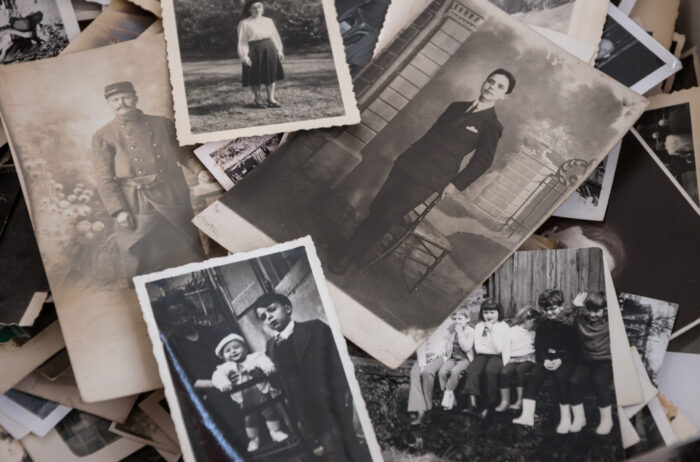
My great aunt Louise was born in 1913. She lived a long and full life: two world wars, her mother dying during the 1918 flu pandemic, marrying and becoming a mother during the Great Depression, picking up painting in her 60s, and knitting blankets to donate to a local hospice well into her 90s. She was born into the Jim Crow South, lived through the Civil Rights movement, and was surprised and delighted to see America’s first Black president.
I used to love listening to her talk about the Great Depression. She told me once that “We didn’t know we were poor because everyone was poor. We just ate a lot of beans.” It felt different to hear about her personal experiences rather than reading from a history book. I admired the grit and resourcefulness she developed from those times.
Louise also shared anecdotes about the grandmother who raised her, born before the Civil War. Her grandmother would confidently declare that “If a person were Episcopal, Virginian, and a Democrat, then they just had to be among God’s elect!” Louise offered me secondhand glimpses into even more remote times. She showed me how her generation had both accepted and rejected legacies of racism inherited from their predecessors.
When Louise died in 2010 just shy of 97, it felt like the end of an era. I and those who loved her remember much of what she told us. However, many of her experiences, stories, and memories are gone forever. When all those of my parents’ generation are no longer alive, her memory will be fainter still.
There is a short verse in this week’s parsha, Shemot, that speaks to this phenomenon. After all of Jacob’s descendants have left Canaan and gone down to Egypt to live there with Joseph, the story relays that “Joseph died, and all his brothers, and all that generation” (Exodus 1:6). Every single descendant of Jacob who had a personal experience of living in the land of Canaan had passed away. Only secondhand stories and legends remained.
I was struck by this line as I read the parsha, perhaps indicative of my own stage in life as an older millennial, sandwiched between older and younger generations. I was surprised that I could not find a single comment on the line by a medieval Jewish commentator. Perhaps they all thought the meaning of the line was obvious. After all, every generation must come to an end.
Ecclesiastes 1:5 also notes this generational aspect of human existence, famously observing that “One generation goes, another comes, but the Earth remains the same forever.” One generation exits, another enters. Even today, each generation only has a living connection with the 3 to 4 generations that come before or after it.
Of course, generations don’t just go; they also come. As those of Louise’s generation died, I began developing relationships with the next generation. I currently work with college students who have never known a time when there weren’t smartphones, the internet, or social media. When I explain that when I was a child there was no searching on Google and that sometimes we just couldn’t find the answer to a factual question, they often look at me dumbfounded or with pity.
Despite the apparently timeless wisdom of Ecclesiastes, I am no longer sure if the second half of the verse (Ecclesiastes 1:5) rings true. The pace of ecological and technological change over the past 200 years has been unprecedented in human history. I would update the verse to read: “One generation goes, another comes, and the Earth is irrevocably changed.” Children growing up today experience our already-climate-changed world as normal. They have never known anything different.
For the generation of the Israelites living in bondage in Egypt, their decisions also irrevocably changed the course of human history. They followed Moses across the Red Sea and into the covenant with God at Sinai. They offer us two lessons for reckoning with the legacies and memories of past generations, honoring and learning from their memories while not being bound by them.
First, the generation of the Exodus teaches us how important it is to tell the treasured stories of past generations. As the Israelites became oppressed and enslaved in Egypt, they still had access to a story of better times elsewhere. The stories of their ancestors in Canaan may have kept their hope alive in exile. They always remembered where they came from.
Second, the generation of the Exodus teaches us that each generation needs to make their own choices. Coming to Egypt was a lifesaving decision for Joseph’s generation: they were dying from a famine in Canaan and needed the grains that Joseph had wisely stored in Egypt. However, circumstances change. Egypt may have offered their ancestors life, but for the generation of the Exodus, it offered only slavery and death. Remembering the past doesn’t mean being bound by it. The Israelites carried on their familial legacy of choosing, but they did not make the same choices.
With the unprecedented technological and ecological changes facing our world, future generations will also face unprecedented challenges and choices. Let’s continue telling the stories of our ancestors—not so that we would be bound by them, but so that those who come after us will be blessed by the treasured wisdom of their memories. Like my great aunt Louise who became an artist in her 60s, I pray that each generation has the insight, courage, and skill to create our world anew.