
Every single person who came on stage over the packed eight-hour National Coalition Conference on Antisemitism and Hate conference—politicians, poets, professors, authors, social media influencers, Muslim, Jewish, Christian, and Sikh leaders—everyone thanked Anila Ali and AMMWEC. It was the best display of hakarat hatov (recognizing the good) that I had seen in a long, long time.
One week later, people have asked me, “What was an antisemitism conference run by Muslim women like?”
Having digested the experience as best I can, my answer is, “Unlike anything else I have ever experienced.” I have been to more than my fair share of Jewish conferences. This was different, though there were certainly Jews of all backgrounds, political affiliations, and denominations on the podium, in the panels, and in the seats alongside Muslims, Christians and Sikhs. Over the past few decades, I have also been to many interfaith symposia, rallies, Iftars, and seders. This was very different.
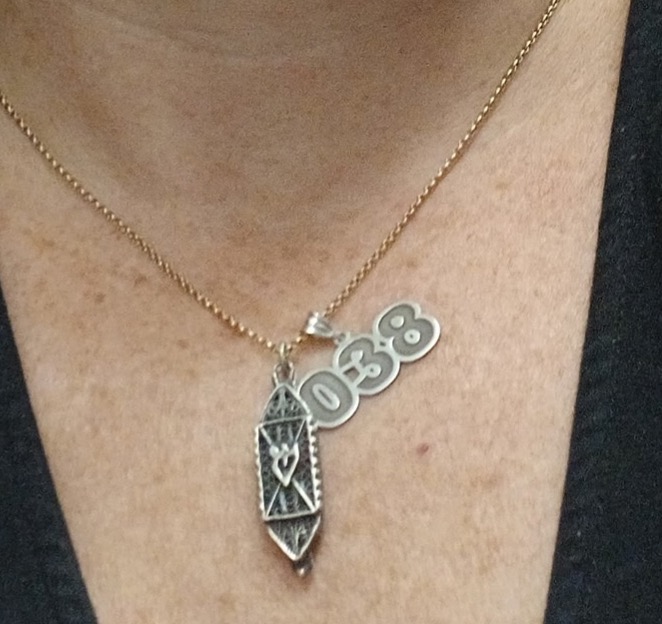
I met Anila Ali and her colleague Soraya Deen at the Elie Wiesel Foundation, partnering with Uyghur organizations for their “Disrupting Uyghur Genocide” conference in New York City in 2024. We bonded over necklaces that highlight our values. Anila and Soraya wore dog tags with “Bring Them Home” messages for the people, mostly Israeli, who were abducted on October 7, 2023. As part of my daily prayer and advocacy, I wore my “182” necklace, representing the still missing abducted Christian and Muslim “Chibok Girls” in Nigeria. Soraya and Anila support women and pluralism in Nigeria, and they both have had fatwas against them since they spoke at the first D.C. rally to support Jews and Israelis after October 7. Between Israel and Nigeria, we had a lot to talk about.
Connecting with them over these years gave me hope, a hope that I could share with friends who asked over and over after October 7, “Tehilah, you work in the interfaith space. Where are the Muslims who are speaking out against the murders, rapes, and abductions?” That feeling of increasing hope and decreasing hopelessness, the feeling of not being in this terror alone, was what encompassed me last week as I sat in the beautiful 1920s wood-paneled National Press Club. The feeling of being in a space devoted to care, not by Jews for Jews but by allies for Jews, was almost breathtaking.
There are four conversations from the day that live in my heart. One is a story from Simran Singh Stuelpnagel, who is a human rights advocate and Sikh minister. He told the story of going to Israel with Anila and Soraya in December 2023. He shared what it was like being with these heroes who have fatwas against them and how they understandably jumped and placed themselves between parked cars when a passing car would backfire, sounding like a gunshot. When they met with Israel’s First Lady Michal Herzog, Herzog asked Anila and Soraya why they were in Israel. They responded, “To witness and protect Israeli women.” Then Herzog asked the same of Simran Singh, to which he replied, “I am here to witness and protect the Muslim women who are here to witness and protect Israeli women.” He then said repeatedly to the Jews in the room, “You are not alone. We are a part of you. You are a part of us.”
The second story comes from the panel hosted by journalist and moderator Wajid Ali Syed. The panel featured members of a Muslim delegation he had invited to Israel in 2025. “Come with your biases, but come,” he had told each of them as he invited them. Many of the panelists were from Pakistan and shared that antisemitism was baked into their upbringing, where their passports still read, “Valid for travel to all countries in the world with the explicit exception of Israel.” The panel shared that it wasn’t only beautiful and positive to visit, but also it made them question what they had been taught. The encounter with a lived Israel showed them a Jewish country where they did not see the apartheid they were prepared for (e.g. separate bathrooms, buses, etc.), where they met Arab members of the Knesset (the Israeli parliament), and where their Muslim bus driver stopped on the side of the road to lay out his prayer carpet and recite one of the five Muslim prayers of the day.
The conference was filled with people with different life experiences and political and religious beliefs from my own. Not every moment was rainbows. But my ancestors from 80 years ago and all those further back could not have imagined this room, the people, or the intention. And, as at any conference or group of people, there were moments of discomfort. As the moderator of the Interfaith Bridge-Building on campus, Sarah Livingston reminded us, “Being uncomfortable means growth. It’s the only way; otherwise we have stagnation.”
The third moment that sticks with me occurred when I checked an urgent message on my phone towards the end of our day. I pulled my attention back to the panel of religious leaders, chiding myself for taking a moment away from a room full of active allies I couldn’t have dreamed up. I had missed a participant in the front row interrupting a panel moderated by Rabbanit Alissa Thomas-Newborn. I tuned in as she intervened with firmness and wisdom to the uninvited rant, which (as I later learned) included antisemitic tropes. Then I saw a previous Christian panelist sitting in the audience, Dr. Carrie Wood from Regent University, turn to her Jewish colleague, Dr. Amy Milligan from Old Dominion University. Dr. Wood gently touched Dr. Milligan’s arm and said, “That’s not what my Christianity looks like.” This moment of allyship brought comfort and support for Dr. Milligan and for colleagues around her who witnessed the exchange.
The fourth powerful educational moment for me came in conversation between Anila Ali and author Dara Horn. Horn shared a story from when she was asked to speak but not mention the “Z” word (“Zionist”) lest it offend Muslims. Horn replied, “I won’t offend Muslims; I’ll only offend those in hate movements. People are afraid of hate movements, but hecklers sit down when we have courage; they don’t have many talking points.”
In truth, as much as I felt seen, cared for, empowered, and not alone in the work to combat the hate against my communities, me, and my family, I also felt the overwhelm of hopelessness in combating hate. Hate serves so many people, even while it destroys so many more. Anila shared that because of her activism, she wasn’t welcome into 90% of her own houses of worship here in the U.S. Hasan Mujtaba, a Pakistani (Sindhi / Urdu) poet, journalist, and human rights advocate, lives in exile in New York since 1999 after reporting on the persecution of Hindus in Sindh. Mujtaba broke my heart sharing his story of visiting Israel, and upon his return—this is where his voice broke mid-retelling—he was silenced and shunned by the expat and exile community, despite having been the poet of the people of Pakistan.
When the conference ended, I said, “Thank you for being here. I am so incredibly sorry that hate, and especially antisemitism, is such a virus, and you have been hurt by the spread of it.” He shared a small smile and then shared, “It is terrible, but it is not as bad as those on October 7 or the six million.” I couldn’t help but say, “But there should be no price for caring about these things.”
Today, writing about this experience one week later, I recall the visceral relief and lightened heart from having strangers and friends of different backgrounds carry my pain and fear. I recall how we all showed up with our differences and our stories but with our willingness to learn and care for one another. Congressman Greg Stanton declared, “No one should have to work on protecting themselves alone.” His words felt like a revelation. Dr. Carrie Wood reminded all of us who are educators that we need to model intentional interfaith relationships to our students.
Our students, our children, everyone needs more of these spaces. I am grateful for the Elie Wiesel Foundation for leading me to enter these new spaces of sisterhood, support, learning, questions, and hope when we meet each other panim el panim (“face-to-face”). Speaker Mustafa Ezzarghani, a Moroccan-American journalist and peace activist, shared that he was “raised hating Jews, celebrating heroes of the second Intifada on Al Jazeera,” but then he remembered his Moroccan grandmother “reminding me how good her Jewish neighbors had been. My grandmother was right.”
We need more encounters like this conference provided: more people meeting people, not ideas or internet rants. When Ali shared, “As a Pakistani Muslim woman, standing against antisemitism is a part of my faith,” Muslims and Jews clapped together in response.