
As a child, I felt guilty a lot. As I lay in my bed trying to fall asleep, I would think of all the things I had done wrong, sometimes things from that day, sometimes a well-worn dog-eared list of things I’d done years in the past. A mean thing I’d said to my mother. A time I was selfish. A harsh response to a friend. A time I’d said something inappropriate in a social setting. Some of these, on reflection, weren’t exactly memories of guilt, but rather of shame. I was ashamed of myself, and it felt like there was no way out, except I guess by forgetting it had ever happened—and I was clearly bad at that.
I don’t really remember adults in my life apologizing to me as a child. In my family, we were yellers, but we made up quickly, usually by reaching the point where we recognized we were being ridiculous and laughed it off, or just by deciding the fight was over and it was time to move on. I rarely remember us spontaneously saying “I’m sorry” to conclude an argument. I know for sure that as a kid I was embarrassed to apologize, and that it felt corny or silly. I couldn’t imagine doing it on purpose of my own volition. Having to apologize was usually the punishment for something I’d done, something I unwillingly gave to the person I’d hurt because an authority figure insisted on it. Apologizing was the consequence of getting caught.
As I grew into an adult, and as I discovered more Jewish ethical teachings, I undertook a project of trying to identify my shortcomings and to improve on them. (This is, of course, a project I still struggle to advance, and hope always to do so.) Jewish tradition has clear teachings about apologizing; it is a necessary day-to-day part of an ethical life, as well as an annual obligation around the High Holidays and leading up to Yom Kippur. This coming Saturday night, Jews around the world will gather for late-night Selichot services, the traditional special service of penitence preceding Rosh Hashanah.
Only later, when I was better able to tolerate both embarrassment and the feeling of corniness, I realized that apologizing was for adults, too, not just children who got in trouble. It was something I gave both to the person I’d wronged and also a gift I gave to myself. Hurting someone couldn’t be totally undone, but I could take action to help ameliorate that hurt—and also thereby to assuage my guilt. And to sleep better.
Despite this childhood obsession with things I had done wrong, as an adult I mostly tend to think I’m right. (I’m not sure if this means I’ve succeeded in my self-improvement or I’ve gone backwards.) Part of my growing into a better spouse was learning to apologize even when I still think I’m right or justified, realizing that rightness isn’t the only measure of what has happened.
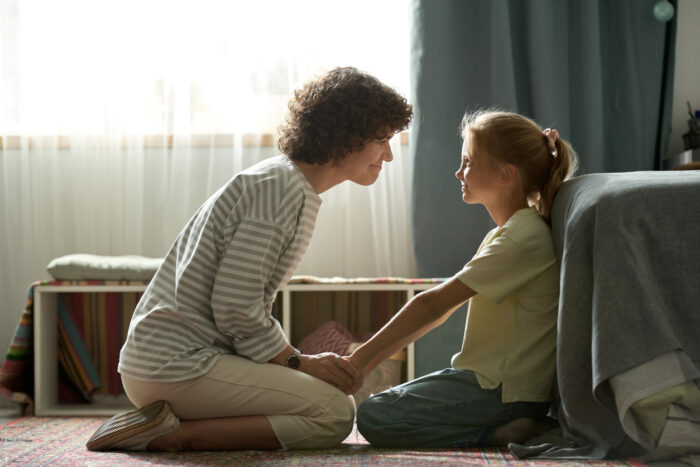
My husband also didn’t really remember adults apologizing to him as a child. Neither of us saw adults apologizing to each other, so we didn’t have good models to base our own behavior on. When we had children of our own, it was important to both of us to change that, and to apologize to our children when we were wrong, when we hurt them, or when we lost our temper. We wanted to be sure they knew that apologizing wasn’t a humiliation that less powerful people were forced into, but that even those in the role of power or responsibility could make mistakes and should try to be kind. We wanted to model apologizing—voluntarily, with care, empathy, and softness.
When they were little, we certainly did our share of telling our kids to apologize to each other, especially when physically hurting each other in a burst of rambunctiousness. As time went on, they began to spontaneously apologize to each other before we even prompted them, even asking each other if they were okay or naming what they were apologizing for. These days, with an 11-year-old and an almost 14-year-old, we have more verbal outbursts and teenage-angst-induced yelling than accidental injury. Yet, even when my daughter has yelled at me about something I have no control over and don’t even really understand (I think I’m beginning to understand the contours of parenting teenagers?), I’m able to put down my frustration when she sidles up to me a few minutes later and says, “I’m sorry for yelling.” It feels like an important success. Especially when I’m able to say, “I’m sorry, too.”